Stainless steel plate has a low elongation rate. The elastic modulus E is large and the hardening index is high. The deep drawing cracking of stainless steel plates sometimes occurs after the deep drawing deformation, and sometimes occurs immediately when the deep drawn part exits the die; Sometimes impact or vibration occurs after deep drawing deformation; Sometimes stored or used for a period of time after deep drawing deformation.
Analysis of common problems in the deep drawing process of stainless steel plates:
1. Reasons for cracking.
Low alloy steel has a high cold hardening index (0.34 for stainless steel plates). Low alloy steel is metastable and undergoes phase transformation during deformation, inducing martensitic phase. Martensite is relatively brittle, so it is easy to crack. In plastic deformation, with the increase of deformation amount, the martensite content will also increase, and the residual stress will also increase. The increase of residual stress and martensite content: The higher the martensite phase content, the greater the residual stress, and the greater the possibility of cracking during processing.
2. Reasons for the formation of surface scratches.
The scratches on the surface of stainless steel sheet deep drawn parts are mainly caused by the relative movement between the product and the mold shell surface. Under certain working pressure, the billet directly rubs against the local surface of the mold shell. In addition, the deformation heat of the billet causes the billet and metal material chips to melt on the surface of the mold, resulting in scratches on the surface of the product.
Preventive measures for common forming defects in stainless steel plates:
1. Choose appropriate stainless steel materials: The commonly used raw materials in low-alloy steel are 1Cr18Ni9Ti and 0Cr18Ni9Ti. 1Cr18Ni9Ti is more stable and has good crack resistance during the deep drawing process than 0Cr18Ni9Ti. Therefore, 1Cr18Ni9Ti raw material should be used.
2. Reasonably choose mold steel. Stainless steel plates harden significantly during deep drawing, causing hard metal material points and adhesion, making it easy for the product and mold surface to be scratched and damaged. Therefore, tool steel should not be used for general mold shells. Practice has proven that the selection of base alloy molds can eliminate scratches and abrasions on the surface of stainless steel plate parts and reduce the damage rate. Another type of raw material is high aluminum copper based alloy mold steel (containing 13Wt~16Wt% aluminum), which has low compatibility with SUS304 stainless steel plate. The deep drawn parts do not stick to the mold shell, and the surface of the deep drawn parts is not easily scratched. The product is low-cost for polishing and has been successfully used in the field of stainless steel plate deep drawing. However, due to the low hardness of the mold shell (40HRC~45HRC), it is more commonly used in the production of T/D products with relatively small thickness. Generally speaking, after deep drawing 1500-2000 pieces on the surface of the concave die, it is easy to cause radiating deep drawing edges starting from the arc R. Silicon nitride ceramics (Si3N4) have become a major engineering material, especially reaction sintered silicon nitride ceramics, which have good high and low temperature mechanical properties, heat shock resistance, and chemical stability, and can be easily made into complex shaped parts. The high toughness, wear resistance, and chemical stability of ceramic materials can be replaced by reaction sintered silicon nitride raw material mold shells instead of metal material mold shells deep SUS304 stainless steel plates.
3. Choose a reasonable convex surface. The concave mold arc has a significant improvement in the magnitude and dispersion of internal stress. The radius of the arc is large, and the total working pressure area of the edge banding ring is not enough, which can easily cause instability and wrinkling; If the arc is too small, the resistance of the raw material entering the concave mold during the deformation process will increase, making it difficult for the raw material to flow and transfer inward, thereby increasing the tensile stress in the transmission zone, which may lead to cracking. Therefore, choose a reasonable convex surface. The radius of the concave mold arc is very important. When the radius rp/t of the convex relative arc is equal to 4, it is beneficial to avoid cracking. The radius of the relative arc between the concave and convex molds is increased, and the degree of extreme deformation is enhanced. When the radius of the concave mold relative arc is 5mm~8mm, it is beneficial to avoid cracking.
4. Previous discussants have also demonstrated that using thin drawing depth can greatly reduce the tangential residual stress of deep drawn parts, effectively avoiding longitudinal cracking. Select the appropriate thinning coefficient (usually 0.9t~0.95t) based on different degrees of deformation and the thickness of the original plate. If the value is too small, the internal stress during deformation will sharply increase, causing the bottom of the drawn part to crack.
5. Adding an intermediate annealing process during the deep drawing process and performing the intermediate annealing process after multiple deep drawings can completely eliminate residual stress and restore the microstructure of low-alloy steel. For high toughness stainless steel plates, intermediate annealing generally needs to be carried out after 1-2 deep drawing processes. For example, the heating temperature of 1Cr18Ni9Ti is usually 1150 ℃~1170 ℃, the heating time is 30 minutes, and it is cooled in airflow or water. In addition, both inter process heat treatment and final product heat treatment should be carried out as soon as possible after deep drawing to avoid deformation or cracking of the product due to long-term storage. However, annealing and cleaning after annealing can lead to an increase in production cycle and affect surface quality.
6. Using appropriate lubricants has a significant effect on the deep drawing of stainless steel plates. Lubricants can form a thin film with certain toughness and ductility between the convex and concave molds, which is beneficial for the deep drawing of stainless steel plates. Polyvinyl fluoride film can be used as a lubricant in actual production and manufacturing for stainless steel sheet deep drawn parts with high degree of deformation and difficult forming. Polyfluoroethylene film has excellent tear resistance. Has a certain degree of toughness and ductility, and is easy to clean. After applying the dry film, the dry film can deform with the billet during the deep drawing process, and can always separate the billet from the mold shell. In addition, the film itself has a certain porosity and a large number of fiber cracks, so it can also store a certain amount of lubricating oil. Therefore, the film is equivalent to a layer of dry film lubricant. This lubrication method can effectively isolate the deformed stainless steel plate from the surface of the mold shell, with good lubrication effect, which is beneficial for improving the service life of the mold shell and the qualification rate of the product.
7. Other preventive measures%
The following preventive measures can also be used for deep drawing of stainless steel plates:
(1) Due to its good oil storage performance and easy formation of lubricating oil film, white cast iron can be used as the raw material for edge banding;
(2) Cone shaped edge banding ring;
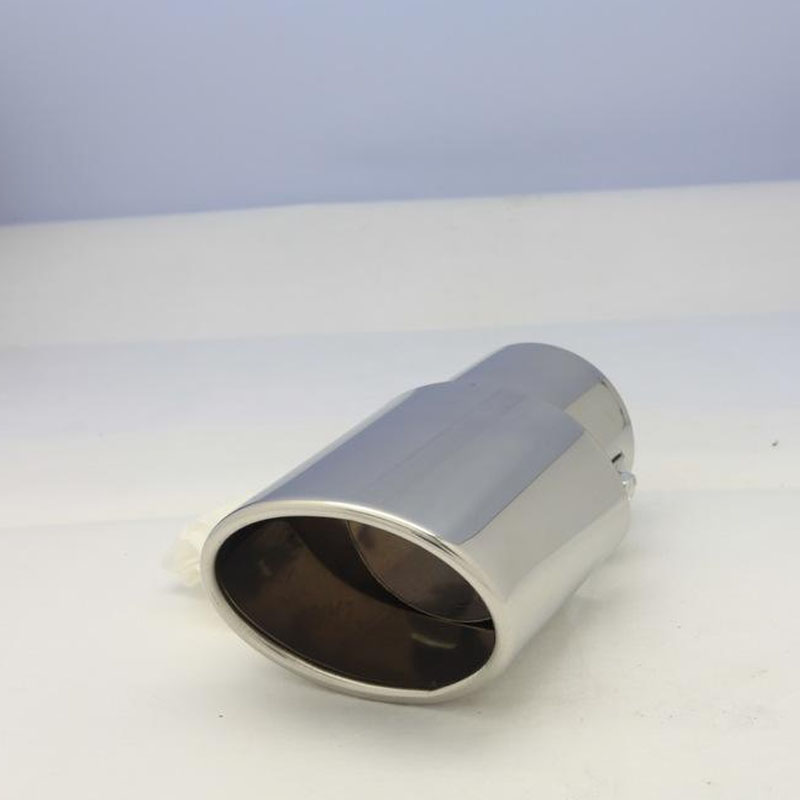
(3) Smooth edge processing without micro cracks. Solution for Deep Drawing Defects of Automotive Muffler Shell: The automotive muffler shell (made of stainless steel plate) manufactured by a certain company for Ford Motor Company cracked during the pre drawing and deep drawing processes. In actual production and manufacturing, the probability of factory deep drawing cracking is about 5% to 8%. Therefore, they improved annealing and pickling between pre drawing and forming drawing, but the effect was not significant.
1. Analysis of the cause of part cracking due to the large deep drawing depth of the product (pre drawing depth of 94mm~95mm). The cross-section of the head is small. Due to thin walls and other reasons, it is difficult to deep draw the parts into shape. The cracked part of the product appears at the arc of the convex mold and the arc of the concave mold. After analysis, it is believed that the reason for the deep drawing of the product is that the internal stress of the raw material increases during deep drawing, and the internal stress of the concave angle also increases (the convex angle is thin). The reason for cracking is that the tensile stress exceeds the strength limit of the raw material; (2) The total area of the flange is unreasonable, which increases the deformation resistance of the raw material and makes it easy to crack; (3) The radius of the circular arc of the concave mold mentioned above is closely related to the dispersion. Due to the small arc of the concave mold, the resistance of the raw material during deformation and the tensile stress in the force transmission area are increased, resulting in excessive internal stress in the deformation area, which in turn causes the part to crack at the concave mold arc; (4) With only conventional lubrication measures, the surface layer of the shell in the same the first mock examination increases during deformation, which correspondingly increases the resistance and flow in the force transfer zone.
Based on the analysis of the reasons for the cracking mentioned above, the following improvement measures have been taken to significantly reduce the cracking rate of the parts during deep drawing.
(1) Apply dry film lubricant (mainly composed of nitrocellulose, oil-based alkyd resin, plasticizer, extreme pressure agent and other additives) on the surface of the concave mold to reduce the frictional resistance between the raw material and the mold shell surface during deformation, making it easier for the raw material to flow from the deformation zone to the force transmission zone. The dry film of the dry film lubricant can separate the mold shell from the billet, avoiding surface scratches and mold shell adhesion of the parts, and improving the surface quality and yield of the parts. At the same time, dry film itself also has a certain degree of toughness, which is beneficial for the deepening and forming of raw materials;
(2) Optimize the flange diameter, reduce tensile stress, and lower deformation resistance. Enhance the horizontal dimensions of the secondary drawing die and improve the concave arc of the secondary drawing die;
(3) After comprehensive analysis, it was decided to enhance the edge cutting process after the pre drawing process, try to cut off excess raw materials as much as possible, reduce the forming resistance of raw materials, and effectively avoid cracking of raw materials during further deformation;
(4) Merge two processes in the original process (i.e. forming deep drawing and flanging process) into one process (forming flanging), so that the processing steps of the parts are not increased, thereby effectively controlling the processing cost. Through the above series of improvement measures, the cracking problem of parts during pre drawing and final drawing processes has been effectively solved. The conclusion is that although stainless steel plates often have defects such as cracking, wrinkling, and surface scratches during the deep drawing process, selecting stainless steel materials with good formability can improve appropriate heat treatment and lubricate the surface of the die.